
SERVICES
ESPR & Digital Product Passport Readiness

Expert Preparation for Expanding EU Rules
The Ecodesign for Sustainable Products Regulation (ESPR) is the EU's effort to make sustainability a design requirement across a far wider range of physical products than earlier ecodesign rules covered. It will set requirements on many new sustainability features and will require major shifts in how companies design their products. Failing to meet ESPR requirements including Digital Product Passports (DPP) will prohibit companies from placing noncompliant products on the EU market.

How ESPR Affects Companies Selling to the EU
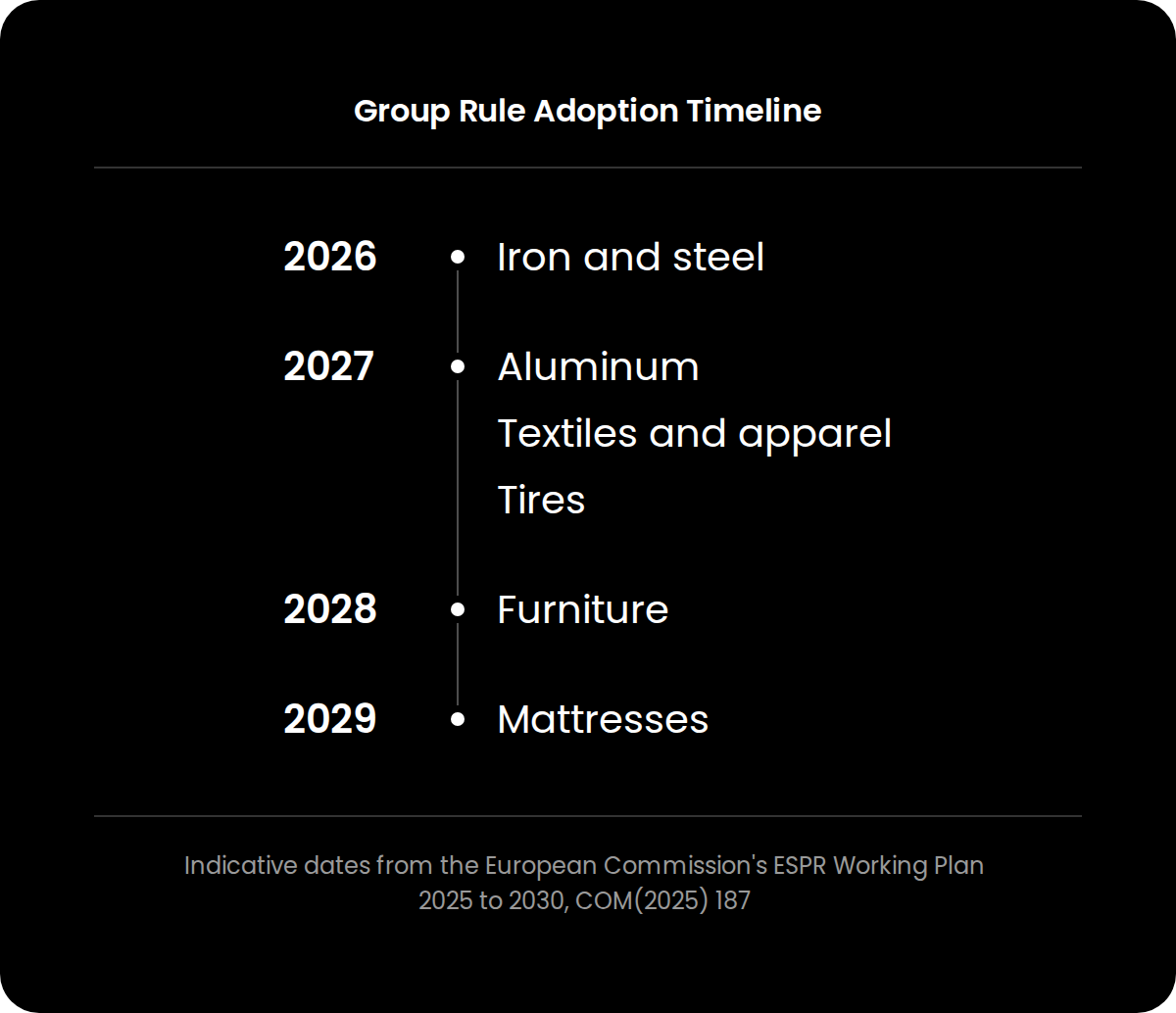
ESPR is taking over from the Ecodesign Directive, which mainly set rules for energy-related products like electronics and appliances. The Commission's first ESPR working plan, published in April 2025, adds six new product groups. These are the years are when the Commission aims to adopt each group's rules, not when compliance starts.

New ESPR Ecodesign Needs
ESPR reaches product categories that have never had ecodesign rules before, and that's what makes it hard to plan for. The working plan also includes two rules that apply across many types of products:
Repairability, including a repair score (targeted for 2027)
Recycled content and recyclability for electrical and electronic equipment (targeted for 2029)
Beyond these, each product group's rules can set performance requirements, such as durability, spare parts availability, and minimum recycled content, and information requirements, such as carbon or environmental footprint.

ESPR: Know What Applies
Ecodesign requirements under ESPR are set through delegated acts, one product group at a time, with some rules covering several product types at once.
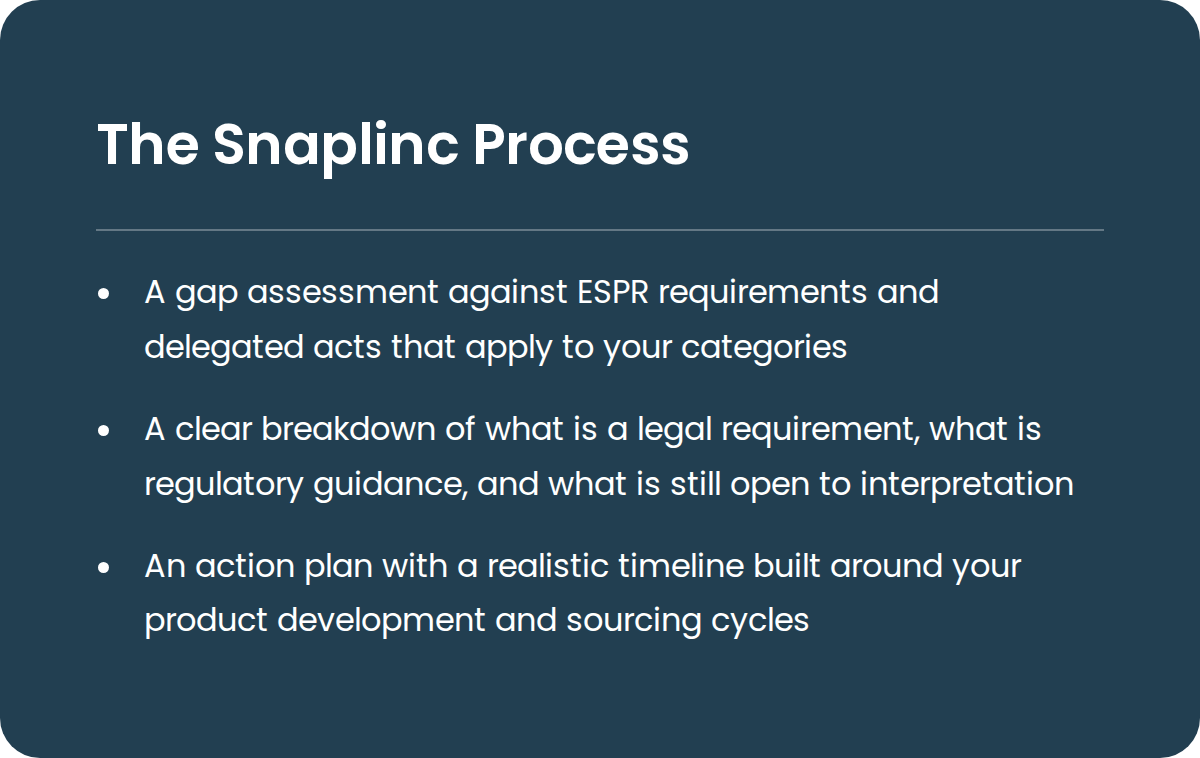
Most of these rules are still being developed, and older Ecodesign rules for energy-related products stay in force while they move over to ESPR. We help you interpret the requirements as they become applicable for your products, work out what is needed in practice, and build a plan to meet compliance milestones on time.
Digital Product Passport Requirements
Every product group that receives Ecodesign rules under ESPR will also need a Digital Product Passport (DPP) that travels with the product, unless an equivalent digital system already provides the information, as the EU's energy label database does for energy-labelled products. The DPP contains data from suppliers and manufacturers a company doesn't directly control, which makes it the hardest part of compliance for many companies.
Companies usually struggle with collecting detailed information from a huge number of suppliers. That means getting the right information, in the right format, on time, and often without the internal hours to track it down.
Where Snaplinc Comes In
Snaplinc is here to ensure your data is at the caliber needed to make DPP compliance doable. That covers:
Creating a data structure for individual products and information collection.
Preparing communication materials that walk your suppliers through what they need to do and why.
Following up directly with factories to complete information and close out missing paperwork.
Helping you choose the right software vendor for your business and which modules to include.
Determining, advising on, and executing your roll-out strategy.
Answering technical questions from your factories to ensure they provide the required information to populate your DPP system.
Want more ESPR & DPP detail?
Read our article to learn more about the requirements and your ESPR obligations as a company selling products into the EU.
ESPR & DPP FAQ
Yes. ESPR rules are attached to the product, regardless of where a company is based. If you sell a product into the EU, that product can only be placed on the market if it is compliant with ESPR rules.
Does ESPR apply to companies based outside the EU?
1
When will ESPR requirements apply to my products?
2
ESPR requirements don’t apply until the EU adopts the specific rules for your product groups, called delegated acts. Once a delegated act is adopted, companies generally get at least 18 months before it applies.
If you sell into the EU, your products likely need a Digital Product Passport. However, note that the Commission can exempt a product group if the technical specifications for passports aren’t ready, or if another EU system already provides the same information.
Do my products need a Digital Product Passport?
3
Digital Product Passport Support From Snaplinc
We work between your chosen software provider and your factories and suppliers. For 12 months or longer, Snaplinc acts as your implementation team when you don't have the expertise or bandwidth to make sense of and act on DPP requirements.
The complex requirements of ESPR and DPP don't have to bog down your compliance team. Schedule a 30-minute consultation to get a head start on DPP requirements.